
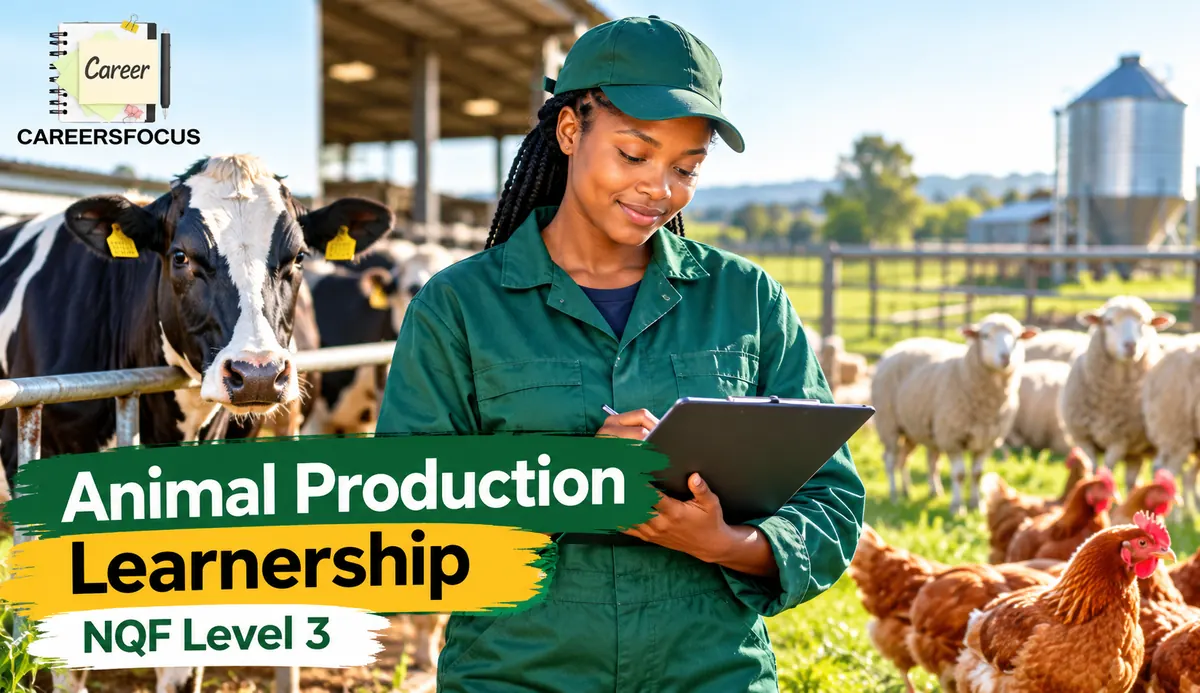
People who want to build a future in agriculture may be interested in the PAI animal production programme offered by Peritum Agri Institute. The programme focuses on livestock production and combines agricultural theory with practical learning, making it relevant to people who want to understand how farms manage animals, resources and agricultural products.
The institute lists a National Certificate in Animal Production at National Qualifications Framework (NQF) Level 3. Its course information gives a duration of 12 months and a minimum entry requirement of Grade 10. However, prospective learners should confirm the current intake, registration arrangements and qualification status directly with the provider before making plans.
For anyone researching an animal production learnership, this guide explains the listed course details, the subjects learners can expect to encounter, the skills involved in livestock farming and how to enquire about joining the programme.
What Is the PAI Animal Production Programme?
Peritum Agri Institute, also known as Peritum Agri, provides agricultural training opportunities for people interested in developing farming skills. Its listed National Certificate in Animal Production programme is aimed at entrant farmers and farm workers who want to improve their knowledge of livestock production.
Animal production involves caring for livestock and managing the processes that help farms produce quality agricultural products. Depending on the farm, this may involve cattle, sheep, goats or other livestock raised for meat, milk, breeding or related agricultural purposes.
The programme’s published information describes a combination of theoretical studies and practical studies. This approach is useful because livestock farming involves more than daily animal care. Farmers and farm workers also need to understand feeding, animal health, reproduction, farm management and the costs associated with running agricultural operations.
Important: The provider’s course listing is not, by itself, confirmation that a funded learnership intake is currently open. Applicants should ask Peritum Agri whether applications are being accepted and what conditions apply to the next intake.
PAI Animal Production Course Details
The following details are published on the provider’s course page:
- Training provider: Peritum Agri Institute
- Programme: National Certificate in Animal Production
- NQF level: Level 3
- SAQA qualification ID listed: 49048
- Credits listed: 127
- Minimum entry requirement listed: Grade 10
- Duration listed: 12 months
- Learning method: 50% theoretical studies and 50% practical studies
- Assessment method: Portfolio of Evidence, according to the course page
- Intended learners: Entrant farmers and farm workers
These details can help prospective learners assess whether the programme suits their goals. However, qualification registration and accreditation information can change. Before registering, ask the institute to confirm the current status of the qualification, its accreditation arrangements and whether the advertised course details remain applicable.
What Will You Learn During an Animal Production Learnership?
The programme page identifies six main learning areas. Together, these subjects cover important parts of livestock farming and agricultural business management.
1. Farm management
Farm management involves planning and organising the resources needed to operate a farm. Learners can develop an understanding of why farms need organised routines, suitable infrastructure, effective resource use and clear work procedures.
These skills are relevant to people who want to assist with daily farming activities or eventually manage their own agricultural operation.
2. Farm finance and staff management
Running a farm requires decisions about expenses, income, labour and the use of available resources. Farm finance and staff management introduce learners to the business side of agriculture.
Understanding these areas can help workers recognise why farmers monitor operating costs, organise responsibilities and plan production activities carefully.
3. Livestock anatomy, physiology and health
Healthy livestock are essential to responsible animal production. This learning area focuses on understanding animals, their bodies and their health.
For people working on farms, knowledge of animal health can support the early recognition of possible problems and encourage appropriate care. Learners should follow farm procedures and seek guidance from qualified animal-health professionals when an animal needs assessment or treatment.
4. Livestock nutrition
Animals need suitable feed and access to clean water to support their health, growth and production. Livestock nutrition helps learners understand the importance of feeding practices in animal management.
Practical feeding decisions depend on factors such as the animal species, age, condition, production purpose and available feed resources. Good nutrition management can contribute to more consistent farm operations.
5. Livestock reproduction
Reproduction is an important part of maintaining livestock populations and planning future production. This subject introduces learners to breeding-related aspects of animal production.
Understanding reproduction can help farm workers appreciate the importance of monitoring animals, maintaining appropriate records and following established breeding and animal-care procedures.
6. Harvesting and marketing livestock products
Producing agricultural goods is only one part of a farming business. Producers also need to understand how products are handled and marketed.
This learning area connects production with the preparation and marketing of livestock products. It can help learners understand why quality, responsible handling and knowledge of potential markets matter to agricultural businesses.
Who Should Consider This Programme?
The provider identifies entrant farmers and farm workers as the intended audience. The listed minimum entry requirement is Grade 10.
The programme may be worth investigating if you:
- Want to develop practical knowledge of livestock farming.
- Already assist with farming activities and want to strengthen your skills.
- Hope to establish or improve a small livestock farming operation.
- Are interested in agricultural work involving animal care and production.
- Want to explore further agricultural training opportunities.
Meeting the stated minimum entry requirement does not automatically guarantee admission. The provider may have additional conditions, documentation requirements or intake-specific rules. Confirm these details before applying.
Career Opportunities After Animal Production Training
Animal production skills can be relevant to several areas of agriculture. Depending on your experience, practical competence, further training and available vacancies, possible career directions may include:
- Livestock farm worker
- Animal husbandry assistant
- Livestock production assistant
- Farm operations assistant
- Assistant on a mixed farming enterprise
- Entry-level agricultural production roles
The programme page also describes learning outcomes related to supervising teams and overseeing agricultural production processes. These are training outcomes, not a promise of employment or immediate appointment to a supervisory position.
Your opportunities will depend on the skills you develop, the experience you gain, employer requirements and whether you pursue additional qualifications.
How to Enquire About the PAI Animal Production Learnership
If you are interested in the programme, use the following steps to obtain accurate information before submitting an application.
Step 1: Visit the official course page.
Go to the Peritum Agri Institute course listing:
Step 2: Confirm whether a current intake is available.
Ask whether the institute is accepting learners now, when the next intake will take place and whether the opportunity is a learnership, a training course or part of a funded project.
Step 3: Verify the entry requirements.
The published page lists Grade 10 as the minimum requirement. Ask whether any additional academic, age, residency or employment conditions apply to the specific intake.
Step 4: Ask about costs and funding.
Although the online listing displays the course as free, confirm the terms directly with the institute. Ask whether tuition is covered, whether any additional expenses apply and whether a stipend is available. Do not assume that every intake is funded or paid.
Step 5: Confirm the qualification details.
Ask the provider to verify the qualification’s current registration and accreditation status, the assessment process and the certificate learners can receive after successfully completing the programme.
Step 6: Follow the provider’s application instructions.
Prepare the documents requested for the current intake. Do not send sensitive personal information to an unverified email address or pay a fee to someone claiming to guarantee admission.
Documents to Prepare
The course page does not provide a definitive document checklist for a current intake. You can nevertheless prepare to ask whether the institute requires:
- A copy of your South African ID or other accepted identification.
- Your latest school results or Grade 10 certificate.
- An updated CV, if requested.
- Proof of relevant farming experience, if applicable.
- Any forms or supporting documents specified by the provider.
Only submit documents that the institute actually requests through its confirmed application process.
Why Agricultural Learnerships Matter
Agricultural training can help learners connect classroom knowledge with the realities of farm work. In livestock production, understanding feeding, animal health, reproduction and farm finances can support better-informed decisions.
For people already working in agriculture, structured learning may help strengthen existing skills. For aspiring farmers, it can provide a starting point for understanding the responsibilities involved in managing livestock and operating a farm.
However, training is only one part of building a career. Practical experience, responsible animal care, reliable work habits and continued learning also matter.
Frequently Asked Questions
Is the PAI animal production learnership open in October 2026?
The course page lists the programme, but it does not confirm a specific October 2026 intake or application deadline. Contact Peritum Agri directly to check current availability.
What is the minimum educational requirement?
The provider’s listing states Grade 10. Confirm whether additional requirements apply to the intake you want to join.
How long does the programme take?
The listed duration is 12 months. Confirm the schedule for the current intake before committing.
Does the programme pay a monthly stipend?
The course page does not confirm a stipend. Ask the institute whether the specific opportunity is funded and whether learners receive any allowance.
What qualification is listed?
The page lists a National Certificate in Animal Production at NQF Level 3, with SAQA ID 49048 and 127 credits. Ask the provider to verify the current qualification registration and accreditation status before enrolling.
Where can I apply or enquire?
Visit the official Peritum Agri course page and follow the provider’s current enrolment or enquiry instructions.
Final Information for Prospective Learners
The PAI animal production programme may be worth exploring if you want to develop livestock farming knowledge and investigate agricultural learnerships in South Africa. Its published course information covers farm management, finance, animal health, nutrition, reproduction and livestock product marketing.
Before making a decision, confirm that enrolment is available, verify the qualification’s current status, and ask about funding, fees and any practical training arrangements. Reliable information from the provider will help you understand what is being offered and whether it matches your career plans.
Information note: This article is based on the provider’s published course information and is intended as a guide for prospective learners. It does not claim that a new intake is open or guarantee admission, funding, a stipend or employment.

Karabo Ntswaki – Author of CareersFocus.co.za
Karabo Ntswaki is passionate about empowering South Africans with reliable, verified, and easily accessible information about careers and education. Through CareersFocus.co.za, Karabo’s mission is to support students, job seekers, and young professionals by providing accurate guidance on learnerships, internships, bursaries.
Her vision is to make CareersFocus.co.za the most trusted online source in South Africa for career and educational information, helping individuals overcome barriers, make informed decisions about professional goals. you can contact me at info@careersfocus.co.za or our website https://careersfocus.co.za/